Difference Between High-Transparency Glass and Standard Glass
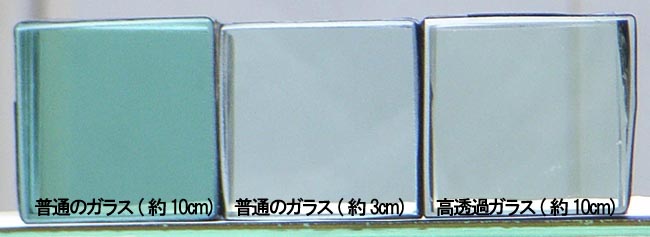
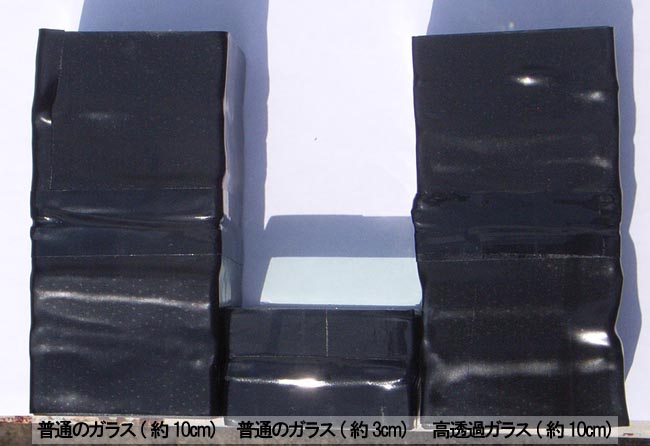
While not particularly noticeable at the thicknesses commonly used for windows, standard architectural glass has a greenish tint. This color is due to trace amounts of iron contained in the glass. High-transparency glass is manufactured using raw materials with minimal iron content, making it glass with higher transparency compared to standard glass. High-transparency glass is used for display glass where works need to be protected without compromising artistic quality, high-level bulletproof glass that tends to be thick, and cover glass for solar cells that need to protect from weather while taking in more light. The photos below are reference photos taken by arranging glass samples on hand, so transparency is inferior compared to when made into laminated glass.